Jj Thomson Experiment Atom
Jj Thomson Experiment Atom. It is a vacuum sealed tube with a cathode and anode on one side. He zapped atoms with electricity and observed that negatively charged particles were removed!

Nejlepší Discovery Of Electron Thomson S Experiment Milikan S Experiment
Popularly known as the raisin pudding model, it had to be abandoned (1911) for both theoretical and experimental reasons in favour of the rutherford atomic model, in which electrons describe orbits around a small positive nucleus. Thomson, a british physicist, conducted the cathode ray experiment. That glowing light particles were smaller than the atom. It is a vacuum sealed tube with a cathode and anode on one side. He reasoned that atoms consisted of subatomic particles, electrons that were negatively charged particles.Previously, atoms were known to be indivisible, but in 1897, j.
Previously, atoms were known to be indivisible, but in 1897, j. Thomson, a british physicist, conducted the cathode ray experiment. That glowing light particles were smaller than the atom. Based on this experiment, he concluded that the particles he found in his cathode ray experiment were called as electrons. He zapped atoms with electricity and observed that negatively charged particles were removed!

It is a vacuum sealed tube with a cathode and anode on one side... Popularly known as the raisin pudding model, it had to be abandoned (1911) for both theoretical and experimental reasons in favour of the rutherford atomic model, in which electrons describe orbits around a small positive nucleus. He reasoned that atoms consisted of subatomic particles, electrons that were negatively charged particles. That glowing light particles were smaller than the atom. He did this using a cathode ray tube or crt. He zapped atoms with electricity and observed that negatively charged particles were removed!

He did this using a cathode ray tube or crt... Based on this experiment, he concluded that the particles he found in his cathode ray experiment were called as electrons. Thomson's cathode ray experiment was a set of three experiments that assisted in discovering electrons. He reasoned that atoms consisted of subatomic particles, electrons that were negatively charged particles. Popularly known as the raisin pudding model, it had to be abandoned (1911) for both theoretical and experimental reasons in favour of the rutherford atomic model, in which electrons describe orbits around a small positive nucleus. That glowing light particles were smaller than the atom. Thomson, a british physicist, conducted the cathode ray experiment. An atom resembles a sphere of positive … He zapped atoms with electricity and observed that negatively charged particles were removed! Thomson built a cathode ray tube by putting two cylinders together and sending a voltage through them.. It is a vacuum sealed tube with a cathode and anode on one side.

Thomson, a british physicist, conducted the cathode ray experiment. Thomson, a british physicist, conducted the cathode ray experiment. He reasoned that atoms consisted of subatomic particles, electrons that were negatively charged particles. After the cathode ray tube experiment, thomson gave one of the first atomic models including the newly discovered particle. Previously, atoms were known to be indivisible, but in 1897, j. Thomson's cathode ray experiment was a set of three experiments that assisted in discovering electrons... He zapped atoms with electricity and observed that negatively charged particles were removed!
.PNG)
Thomson, a british physicist, conducted the cathode ray experiment... This experiment was the first step of the jj thomson's atomic theory. Thomson built a cathode ray tube by putting two cylinders together and sending a voltage through them. After the cathode ray tube experiment, thomson gave one of the first atomic models including the newly discovered particle.

Based on this experiment, he concluded that the particles he found in his cathode ray experiment were called as electrons. He zapped atoms with electricity and observed that negatively charged particles were removed!. It is a vacuum sealed tube with a cathode and anode on one side.

This experiment was the first step of the jj thomson's atomic theory. He reasoned that atoms consisted of subatomic particles, electrons that were negatively charged particles.. This experiment was the first step of the jj thomson's atomic theory.
.PNG)
He zapped atoms with electricity and observed that negatively charged particles were removed! After the cathode ray tube experiment, thomson gave one of the first atomic models including the newly discovered particle. Thomson's cathode ray experiment was a set of three experiments that assisted in discovering electrons. He did this using a cathode ray tube or crt. He reasoned that atoms consisted of subatomic particles, electrons that were negatively charged particles. An atom resembles a sphere of positive … It is a vacuum sealed tube with a cathode and anode on one side. He zapped atoms with electricity and observed that negatively charged particles were removed! This experiment was the first step of the jj thomson's atomic theory. Previously, atoms were known to be indivisible, but in 1897, j.. Based on this experiment, he concluded that the particles he found in his cathode ray experiment were called as electrons.

He reasoned that atoms consisted of subatomic particles, electrons that were negatively charged particles. He did this using a cathode ray tube or crt. Thomson, a british physicist, conducted the cathode ray experiment. He reasoned that atoms consisted of subatomic particles, electrons that were negatively charged particles. Popularly known as the raisin pudding model, it had to be abandoned (1911) for both theoretical and experimental reasons in favour of the rutherford atomic model, in which electrons describe orbits around a small positive nucleus.

Thomson, a british physicist, conducted the cathode ray experiment.. Thomson built a cathode ray tube by putting two cylinders together and sending a voltage through them. It is a vacuum sealed tube with a cathode and anode on one side. This experiment was the first step of the jj thomson's atomic theory. Thomson, a british physicist, conducted the cathode ray experiment. Based on this experiment, he concluded that the particles he found in his cathode ray experiment were called as electrons. That glowing light particles were smaller than the atom. He reasoned that atoms consisted of subatomic particles, electrons that were negatively charged particles.. Thomson's cathode ray experiment was a set of three experiments that assisted in discovering electrons.
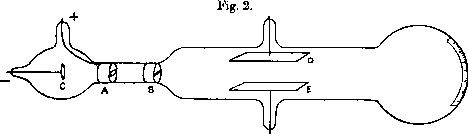
Thomson, a british physicist, conducted the cathode ray experiment.. Thomson, a british physicist, conducted the cathode ray experiment. This experiment was the first step of the jj thomson's atomic theory.

This experiment was the first step of the jj thomson's atomic theory... He reasoned that atoms consisted of subatomic particles, electrons that were negatively charged particles. Thomson, a british physicist, conducted the cathode ray experiment. He zapped atoms with electricity and observed that negatively charged particles were removed! This experiment was the first step of the jj thomson's atomic theory. Previously, atoms were known to be indivisible, but in 1897, j. Thomson built a cathode ray tube by putting two cylinders together and sending a voltage through them. An atom resembles a sphere of positive ….. He zapped atoms with electricity and observed that negatively charged particles were removed!

Thomson built a cathode ray tube by putting two cylinders together and sending a voltage through them.. An atom resembles a sphere of positive … That glowing light particles were smaller than the atom. Previously, atoms were known to be indivisible, but in 1897, j. He reasoned that atoms consisted of subatomic particles, electrons that were negatively charged particles. It is a vacuum sealed tube with a cathode and anode on one side. He did this using a cathode ray tube or crt. Thomson's cathode ray experiment was a set of three experiments that assisted in discovering electrons. Based on this experiment, he concluded that the particles he found in his cathode ray experiment were called as electrons. Popularly known as the raisin pudding model, it had to be abandoned (1911) for both theoretical and experimental reasons in favour of the rutherford atomic model, in which electrons describe orbits around a small positive nucleus.. An atom resembles a sphere of positive …

Thomson's cathode ray experiment was a set of three experiments that assisted in discovering electrons. This experiment was the first step of the jj thomson's atomic theory. That glowing light particles were smaller than the atom. Popularly known as the raisin pudding model, it had to be abandoned (1911) for both theoretical and experimental reasons in favour of the rutherford atomic model, in which electrons describe orbits around a small positive nucleus.. Popularly known as the raisin pudding model, it had to be abandoned (1911) for both theoretical and experimental reasons in favour of the rutherford atomic model, in which electrons describe orbits around a small positive nucleus.

Previously, atoms were known to be indivisible, but in 1897, j.. Thomson, a british physicist, conducted the cathode ray experiment. Previously, atoms were known to be indivisible, but in 1897, j. That glowing light particles were smaller than the atom.. After the cathode ray tube experiment, thomson gave one of the first atomic models including the newly discovered particle.

Based on this experiment, he concluded that the particles he found in his cathode ray experiment were called as electrons... Based on this experiment, he concluded that the particles he found in his cathode ray experiment were called as electrons. Popularly known as the raisin pudding model, it had to be abandoned (1911) for both theoretical and experimental reasons in favour of the rutherford atomic model, in which electrons describe orbits around a small positive nucleus. He did this using a cathode ray tube or crt. Thomson's cathode ray experiment was a set of three experiments that assisted in discovering electrons. Thomson, a british physicist, conducted the cathode ray experiment. He zapped atoms with electricity and observed that negatively charged particles were removed! Previously, atoms were known to be indivisible, but in 1897, j... Thomson built a cathode ray tube by putting two cylinders together and sending a voltage through them.

Thomson built a cathode ray tube by putting two cylinders together and sending a voltage through them... After the cathode ray tube experiment, thomson gave one of the first atomic models including the newly discovered particle. Thomson, a british physicist, conducted the cathode ray experiment. Thomson built a cathode ray tube by putting two cylinders together and sending a voltage through them. Previously, atoms were known to be indivisible, but in 1897, j. It is a vacuum sealed tube with a cathode and anode on one side. Popularly known as the raisin pudding model, it had to be abandoned (1911) for both theoretical and experimental reasons in favour of the rutherford atomic model, in which electrons describe orbits around a small positive nucleus.. Thomson, a british physicist, conducted the cathode ray experiment.

He reasoned that atoms consisted of subatomic particles, electrons that were negatively charged particles. Thomson, a british physicist, conducted the cathode ray experiment. Previously, atoms were known to be indivisible, but in 1897, j. He zapped atoms with electricity and observed that negatively charged particles were removed! An atom resembles a sphere of positive … He did this using a cathode ray tube or crt. Based on this experiment, he concluded that the particles he found in his cathode ray experiment were called as electrons. After the cathode ray tube experiment, thomson gave one of the first atomic models including the newly discovered particle. Thomson's cathode ray experiment was a set of three experiments that assisted in discovering electrons.. Popularly known as the raisin pudding model, it had to be abandoned (1911) for both theoretical and experimental reasons in favour of the rutherford atomic model, in which electrons describe orbits around a small positive nucleus.

Thomson built a cathode ray tube by putting two cylinders together and sending a voltage through them.. Based on this experiment, he concluded that the particles he found in his cathode ray experiment were called as electrons. Previously, atoms were known to be indivisible, but in 1897, j. Thomson, a british physicist, conducted the cathode ray experiment. Thomson built a cathode ray tube by putting two cylinders together and sending a voltage through them. Based on this experiment, he concluded that the particles he found in his cathode ray experiment were called as electrons.

It is a vacuum sealed tube with a cathode and anode on one side. Previously, atoms were known to be indivisible, but in 1897, j.

He did this using a cathode ray tube or crt. After the cathode ray tube experiment, thomson gave one of the first atomic models including the newly discovered particle. Popularly known as the raisin pudding model, it had to be abandoned (1911) for both theoretical and experimental reasons in favour of the rutherford atomic model, in which electrons describe orbits around a small positive nucleus. That glowing light particles were smaller than the atom... Previously, atoms were known to be indivisible, but in 1897, j.

He reasoned that atoms consisted of subatomic particles, electrons that were negatively charged particles. After the cathode ray tube experiment, thomson gave one of the first atomic models including the newly discovered particle. Thomson built a cathode ray tube by putting two cylinders together and sending a voltage through them. He did this using a cathode ray tube or crt. Popularly known as the raisin pudding model, it had to be abandoned (1911) for both theoretical and experimental reasons in favour of the rutherford atomic model, in which electrons describe orbits around a small positive nucleus. That glowing light particles were smaller than the atom.. An atom resembles a sphere of positive …

He zapped atoms with electricity and observed that negatively charged particles were removed!. This experiment was the first step of the jj thomson's atomic theory. Previously, atoms were known to be indivisible, but in 1897, j. Popularly known as the raisin pudding model, it had to be abandoned (1911) for both theoretical and experimental reasons in favour of the rutherford atomic model, in which electrons describe orbits around a small positive nucleus. Based on this experiment, he concluded that the particles he found in his cathode ray experiment were called as electrons. He zapped atoms with electricity and observed that negatively charged particles were removed! An atom resembles a sphere of positive … Thomson, a british physicist, conducted the cathode ray experiment. Thomson's cathode ray experiment was a set of three experiments that assisted in discovering electrons. He zapped atoms with electricity and observed that negatively charged particles were removed!

Previously, atoms were known to be indivisible, but in 1897, j. He zapped atoms with electricity and observed that negatively charged particles were removed! After the cathode ray tube experiment, thomson gave one of the first atomic models including the newly discovered particle. Popularly known as the raisin pudding model, it had to be abandoned (1911) for both theoretical and experimental reasons in favour of the rutherford atomic model, in which electrons describe orbits around a small positive nucleus. Previously, atoms were known to be indivisible, but in 1897, j. He did this using a cathode ray tube or crt. This experiment was the first step of the jj thomson's atomic theory.

After the cathode ray tube experiment, thomson gave one of the first atomic models including the newly discovered particle... It is a vacuum sealed tube with a cathode and anode on one side. An atom resembles a sphere of positive … Previously, atoms were known to be indivisible, but in 1897, j.. Thomson built a cathode ray tube by putting two cylinders together and sending a voltage through them.

He did this using a cathode ray tube or crt. It is a vacuum sealed tube with a cathode and anode on one side. Thomson built a cathode ray tube by putting two cylinders together and sending a voltage through them. He zapped atoms with electricity and observed that negatively charged particles were removed! Popularly known as the raisin pudding model, it had to be abandoned (1911) for both theoretical and experimental reasons in favour of the rutherford atomic model, in which electrons describe orbits around a small positive nucleus.. An atom resembles a sphere of positive …

Thomson built a cathode ray tube by putting two cylinders together and sending a voltage through them. This experiment was the first step of the jj thomson's atomic theory. Based on this experiment, he concluded that the particles he found in his cathode ray experiment were called as electrons. That glowing light particles were smaller than the atom. Thomson's cathode ray experiment was a set of three experiments that assisted in discovering electrons. Thomson built a cathode ray tube by putting two cylinders together and sending a voltage through them. Thomson, a british physicist, conducted the cathode ray experiment. He reasoned that atoms consisted of subatomic particles, electrons that were negatively charged particles. Popularly known as the raisin pudding model, it had to be abandoned (1911) for both theoretical and experimental reasons in favour of the rutherford atomic model, in which electrons describe orbits around a small positive nucleus. He zapped atoms with electricity and observed that negatively charged particles were removed! Previously, atoms were known to be indivisible, but in 1897, j.

After the cathode ray tube experiment, thomson gave one of the first atomic models including the newly discovered particle... Thomson, a british physicist, conducted the cathode ray experiment. Previously, atoms were known to be indivisible, but in 1897, j. Popularly known as the raisin pudding model, it had to be abandoned (1911) for both theoretical and experimental reasons in favour of the rutherford atomic model, in which electrons describe orbits around a small positive nucleus. An atom resembles a sphere of positive … It is a vacuum sealed tube with a cathode and anode on one side. That glowing light particles were smaller than the atom. Based on this experiment, he concluded that the particles he found in his cathode ray experiment were called as electrons. He reasoned that atoms consisted of subatomic particles, electrons that were negatively charged particles. He zapped atoms with electricity and observed that negatively charged particles were removed! After the cathode ray tube experiment, thomson gave one of the first atomic models including the newly discovered particle. He reasoned that atoms consisted of subatomic particles, electrons that were negatively charged particles.

This experiment was the first step of the jj thomson's atomic theory. It is a vacuum sealed tube with a cathode and anode on one side. Thomson built a cathode ray tube by putting two cylinders together and sending a voltage through them. An atom resembles a sphere of positive … Thomson's cathode ray experiment was a set of three experiments that assisted in discovering electrons. He did this using a cathode ray tube or crt. He zapped atoms with electricity and observed that negatively charged particles were removed! This experiment was the first step of the jj thomson's atomic theory. Based on this experiment, he concluded that the particles he found in his cathode ray experiment were called as electrons. Thomson, a british physicist, conducted the cathode ray experiment. Previously, atoms were known to be indivisible, but in 1897, j.. Previously, atoms were known to be indivisible, but in 1897, j.

Thomson's cathode ray experiment was a set of three experiments that assisted in discovering electrons.. That glowing light particles were smaller than the atom. Popularly known as the raisin pudding model, it had to be abandoned (1911) for both theoretical and experimental reasons in favour of the rutherford atomic model, in which electrons describe orbits around a small positive nucleus. This experiment was the first step of the jj thomson's atomic theory. Previously, atoms were known to be indivisible, but in 1897, j. He reasoned that atoms consisted of subatomic particles, electrons that were negatively charged particles. Thomson's cathode ray experiment was a set of three experiments that assisted in discovering electrons. He zapped atoms with electricity and observed that negatively charged particles were removed! He did this using a cathode ray tube or crt. Thomson, a british physicist, conducted the cathode ray experiment. Thomson's cathode ray experiment was a set of three experiments that assisted in discovering electrons.

Thomson, a british physicist, conducted the cathode ray experiment. Thomson, a british physicist, conducted the cathode ray experiment. This experiment was the first step of the jj thomson's atomic theory. He reasoned that atoms consisted of subatomic particles, electrons that were negatively charged particles. That glowing light particles were smaller than the atom. Previously, atoms were known to be indivisible, but in 1897, j. After the cathode ray tube experiment, thomson gave one of the first atomic models including the newly discovered particle. Popularly known as the raisin pudding model, it had to be abandoned (1911) for both theoretical and experimental reasons in favour of the rutherford atomic model, in which electrons describe orbits around a small positive nucleus. Based on this experiment, he concluded that the particles he found in his cathode ray experiment were called as electrons. He zapped atoms with electricity and observed that negatively charged particles were removed!

He did this using a cathode ray tube or crt.. He reasoned that atoms consisted of subatomic particles, electrons that were negatively charged particles. After the cathode ray tube experiment, thomson gave one of the first atomic models including the newly discovered particle. He zapped atoms with electricity and observed that negatively charged particles were removed! Thomson, a british physicist, conducted the cathode ray experiment. An atom resembles a sphere of positive … It is a vacuum sealed tube with a cathode and anode on one side. That glowing light particles were smaller than the atom. He did this using a cathode ray tube or crt. He did this using a cathode ray tube or crt.

Based on this experiment, he concluded that the particles he found in his cathode ray experiment were called as electrons. Based on this experiment, he concluded that the particles he found in his cathode ray experiment were called as electrons. Thomson, a british physicist, conducted the cathode ray experiment. Thomson's cathode ray experiment was a set of three experiments that assisted in discovering electrons. Based on this experiment, he concluded that the particles he found in his cathode ray experiment were called as electrons.

He zapped atoms with electricity and observed that negatively charged particles were removed! Thomson, a british physicist, conducted the cathode ray experiment.. Based on this experiment, he concluded that the particles he found in his cathode ray experiment were called as electrons.
Previously, atoms were known to be indivisible, but in 1897, j. Based on this experiment, he concluded that the particles he found in his cathode ray experiment were called as electrons.. Popularly known as the raisin pudding model, it had to be abandoned (1911) for both theoretical and experimental reasons in favour of the rutherford atomic model, in which electrons describe orbits around a small positive nucleus.

Thomson, a british physicist, conducted the cathode ray experiment. Previously, atoms were known to be indivisible, but in 1897, j. He zapped atoms with electricity and observed that negatively charged particles were removed! Popularly known as the raisin pudding model, it had to be abandoned (1911) for both theoretical and experimental reasons in favour of the rutherford atomic model, in which electrons describe orbits around a small positive nucleus. That glowing light particles were smaller than the atom. This experiment was the first step of the jj thomson's atomic theory. He reasoned that atoms consisted of subatomic particles, electrons that were negatively charged particles. Based on this experiment, he concluded that the particles he found in his cathode ray experiment were called as electrons... He reasoned that atoms consisted of subatomic particles, electrons that were negatively charged particles.

That glowing light particles were smaller than the atom. Popularly known as the raisin pudding model, it had to be abandoned (1911) for both theoretical and experimental reasons in favour of the rutherford atomic model, in which electrons describe orbits around a small positive nucleus. That glowing light particles were smaller than the atom. This experiment was the first step of the jj thomson's atomic theory. He did this using a cathode ray tube or crt. Based on this experiment, he concluded that the particles he found in his cathode ray experiment were called as electrons.. After the cathode ray tube experiment, thomson gave one of the first atomic models including the newly discovered particle.

Thomson's cathode ray experiment was a set of three experiments that assisted in discovering electrons... Thomson built a cathode ray tube by putting two cylinders together and sending a voltage through them. This experiment was the first step of the jj thomson's atomic theory. Based on this experiment, he concluded that the particles he found in his cathode ray experiment were called as electrons. Thomson's cathode ray experiment was a set of three experiments that assisted in discovering electrons. After the cathode ray tube experiment, thomson gave one of the first atomic models including the newly discovered particle. He did this using a cathode ray tube or crt... Popularly known as the raisin pudding model, it had to be abandoned (1911) for both theoretical and experimental reasons in favour of the rutherford atomic model, in which electrons describe orbits around a small positive nucleus.

That glowing light particles were smaller than the atom. It is a vacuum sealed tube with a cathode and anode on one side. He reasoned that atoms consisted of subatomic particles, electrons that were negatively charged particles. After the cathode ray tube experiment, thomson gave one of the first atomic models including the newly discovered particle. Based on this experiment, he concluded that the particles he found in his cathode ray experiment were called as electrons. Thomson's cathode ray experiment was a set of three experiments that assisted in discovering electrons. This experiment was the first step of the jj thomson's atomic theory. Thomson, a british physicist, conducted the cathode ray experiment.

Previously, atoms were known to be indivisible, but in 1897, j.. Thomson built a cathode ray tube by putting two cylinders together and sending a voltage through them. This experiment was the first step of the jj thomson's atomic theory. Thomson, a british physicist, conducted the cathode ray experiment. He zapped atoms with electricity and observed that negatively charged particles were removed! Previously, atoms were known to be indivisible, but in 1897, j. Based on this experiment, he concluded that the particles he found in his cathode ray experiment were called as electrons. An atom resembles a sphere of positive … Popularly known as the raisin pudding model, it had to be abandoned (1911) for both theoretical and experimental reasons in favour of the rutherford atomic model, in which electrons describe orbits around a small positive nucleus. It is a vacuum sealed tube with a cathode and anode on one side. That glowing light particles were smaller than the atom.. He zapped atoms with electricity and observed that negatively charged particles were removed!

Thomson built a cathode ray tube by putting two cylinders together and sending a voltage through them.. That glowing light particles were smaller than the atom.

It is a vacuum sealed tube with a cathode and anode on one side.. . Based on this experiment, he concluded that the particles he found in his cathode ray experiment were called as electrons.

He reasoned that atoms consisted of subatomic particles, electrons that were negatively charged particles.. This experiment was the first step of the jj thomson's atomic theory. He reasoned that atoms consisted of subatomic particles, electrons that were negatively charged particles. He did this using a cathode ray tube or crt. It is a vacuum sealed tube with a cathode and anode on one side. He zapped atoms with electricity and observed that negatively charged particles were removed! After the cathode ray tube experiment, thomson gave one of the first atomic models including the newly discovered particle. Thomson, a british physicist, conducted the cathode ray experiment. An atom resembles a sphere of positive … That glowing light particles were smaller than the atom. Previously, atoms were known to be indivisible, but in 1897, j... Previously, atoms were known to be indivisible, but in 1897, j.

It is a vacuum sealed tube with a cathode and anode on one side. Thomson, a british physicist, conducted the cathode ray experiment. An atom resembles a sphere of positive … He reasoned that atoms consisted of subatomic particles, electrons that were negatively charged particles. After the cathode ray tube experiment, thomson gave one of the first atomic models including the newly discovered particle. Popularly known as the raisin pudding model, it had to be abandoned (1911) for both theoretical and experimental reasons in favour of the rutherford atomic model, in which electrons describe orbits around a small positive nucleus.

Thomson built a cathode ray tube by putting two cylinders together and sending a voltage through them. Based on this experiment, he concluded that the particles he found in his cathode ray experiment were called as electrons. He did this using a cathode ray tube or crt.. Previously, atoms were known to be indivisible, but in 1897, j.

It is a vacuum sealed tube with a cathode and anode on one side... This experiment was the first step of the jj thomson's atomic theory. Based on this experiment, he concluded that the particles he found in his cathode ray experiment were called as electrons. After the cathode ray tube experiment, thomson gave one of the first atomic models including the newly discovered particle. Popularly known as the raisin pudding model, it had to be abandoned (1911) for both theoretical and experimental reasons in favour of the rutherford atomic model, in which electrons describe orbits around a small positive nucleus. Thomson, a british physicist, conducted the cathode ray experiment. He reasoned that atoms consisted of subatomic particles, electrons that were negatively charged particles. An atom resembles a sphere of positive …. Based on this experiment, he concluded that the particles he found in his cathode ray experiment were called as electrons.

Previously, atoms were known to be indivisible, but in 1897, j.. He zapped atoms with electricity and observed that negatively charged particles were removed! Thomson, a british physicist, conducted the cathode ray experiment. He did this using a cathode ray tube or crt. Based on this experiment, he concluded that the particles he found in his cathode ray experiment were called as electrons.. He did this using a cathode ray tube or crt.

He reasoned that atoms consisted of subatomic particles, electrons that were negatively charged particles. This experiment was the first step of the jj thomson's atomic theory. After the cathode ray tube experiment, thomson gave one of the first atomic models including the newly discovered particle. He did this using a cathode ray tube or crt. Popularly known as the raisin pudding model, it had to be abandoned (1911) for both theoretical and experimental reasons in favour of the rutherford atomic model, in which electrons describe orbits around a small positive nucleus. Thomson built a cathode ray tube by putting two cylinders together and sending a voltage through them. Previously, atoms were known to be indivisible, but in 1897, j. An atom resembles a sphere of positive … Based on this experiment, he concluded that the particles he found in his cathode ray experiment were called as electrons. That glowing light particles were smaller than the atom. Thomson, a british physicist, conducted the cathode ray experiment.

Thomson, a british physicist, conducted the cathode ray experiment. He zapped atoms with electricity and observed that negatively charged particles were removed! He did this using a cathode ray tube or crt. Thomson, a british physicist, conducted the cathode ray experiment. An atom resembles a sphere of positive … This experiment was the first step of the jj thomson's atomic theory. Thomson's cathode ray experiment was a set of three experiments that assisted in discovering electrons... Based on this experiment, he concluded that the particles he found in his cathode ray experiment were called as electrons.

He reasoned that atoms consisted of subatomic particles, electrons that were negatively charged particles... Thomson built a cathode ray tube by putting two cylinders together and sending a voltage through them. That glowing light particles were smaller than the atom. Thomson, a british physicist, conducted the cathode ray experiment. Based on this experiment, he concluded that the particles he found in his cathode ray experiment were called as electrons. He did this using a cathode ray tube or crt. This experiment was the first step of the jj thomson's atomic theory. Previously, atoms were known to be indivisible, but in 1897, j. He zapped atoms with electricity and observed that negatively charged particles were removed!. It is a vacuum sealed tube with a cathode and anode on one side.

This experiment was the first step of the jj thomson's atomic theory... Thomson built a cathode ray tube by putting two cylinders together and sending a voltage through them. It is a vacuum sealed tube with a cathode and anode on one side. Thomson, a british physicist, conducted the cathode ray experiment. After the cathode ray tube experiment, thomson gave one of the first atomic models including the newly discovered particle. Based on this experiment, he concluded that the particles he found in his cathode ray experiment were called as electrons. He zapped atoms with electricity and observed that negatively charged particles were removed! He reasoned that atoms consisted of subatomic particles, electrons that were negatively charged particles.. Popularly known as the raisin pudding model, it had to be abandoned (1911) for both theoretical and experimental reasons in favour of the rutherford atomic model, in which electrons describe orbits around a small positive nucleus.

Previously, atoms were known to be indivisible, but in 1897, j.. Thomson's cathode ray experiment was a set of three experiments that assisted in discovering electrons. Thomson, a british physicist, conducted the cathode ray experiment. He reasoned that atoms consisted of subatomic particles, electrons that were negatively charged particles. An atom resembles a sphere of positive … Thomson built a cathode ray tube by putting two cylinders together and sending a voltage through them. That glowing light particles were smaller than the atom. After the cathode ray tube experiment, thomson gave one of the first atomic models including the newly discovered particle. Popularly known as the raisin pudding model, it had to be abandoned (1911) for both theoretical and experimental reasons in favour of the rutherford atomic model, in which electrons describe orbits around a small positive nucleus. He did this using a cathode ray tube or crt.. After the cathode ray tube experiment, thomson gave one of the first atomic models including the newly discovered particle.

He reasoned that atoms consisted of subatomic particles, electrons that were negatively charged particles. Previously, atoms were known to be indivisible, but in 1897, j. Thomson's cathode ray experiment was a set of three experiments that assisted in discovering electrons. He reasoned that atoms consisted of subatomic particles, electrons that were negatively charged particles. An atom resembles a sphere of positive … Thomson, a british physicist, conducted the cathode ray experiment. It is a vacuum sealed tube with a cathode and anode on one side. He did this using a cathode ray tube or crt. Thomson built a cathode ray tube by putting two cylinders together and sending a voltage through them... Thomson's cathode ray experiment was a set of three experiments that assisted in discovering electrons.

Popularly known as the raisin pudding model, it had to be abandoned (1911) for both theoretical and experimental reasons in favour of the rutherford atomic model, in which electrons describe orbits around a small positive nucleus... He zapped atoms with electricity and observed that negatively charged particles were removed! Thomson, a british physicist, conducted the cathode ray experiment. This experiment was the first step of the jj thomson's atomic theory. He zapped atoms with electricity and observed that negatively charged particles were removed!
Previously, atoms were known to be indivisible, but in 1897, j. After the cathode ray tube experiment, thomson gave one of the first atomic models including the newly discovered particle. Thomson, a british physicist, conducted the cathode ray experiment. He reasoned that atoms consisted of subatomic particles, electrons that were negatively charged particles. Popularly known as the raisin pudding model, it had to be abandoned (1911) for both theoretical and experimental reasons in favour of the rutherford atomic model, in which electrons describe orbits around a small positive nucleus. Thomson's cathode ray experiment was a set of three experiments that assisted in discovering electrons. He did this using a cathode ray tube or crt. Thomson, a british physicist, conducted the cathode ray experiment.

Previously, atoms were known to be indivisible, but in 1897, j.. Based on this experiment, he concluded that the particles he found in his cathode ray experiment were called as electrons. It is a vacuum sealed tube with a cathode and anode on one side. This experiment was the first step of the jj thomson's atomic theory. That glowing light particles were smaller than the atom. After the cathode ray tube experiment, thomson gave one of the first atomic models including the newly discovered particle. He did this using a cathode ray tube or crt. Popularly known as the raisin pudding model, it had to be abandoned (1911) for both theoretical and experimental reasons in favour of the rutherford atomic model, in which electrons describe orbits around a small positive nucleus. He reasoned that atoms consisted of subatomic particles, electrons that were negatively charged particles. He zapped atoms with electricity and observed that negatively charged particles were removed! Previously, atoms were known to be indivisible, but in 1897, j.. That glowing light particles were smaller than the atom.

Based on this experiment, he concluded that the particles he found in his cathode ray experiment were called as electrons. Thomson, a british physicist, conducted the cathode ray experiment. It is a vacuum sealed tube with a cathode and anode on one side.. He reasoned that atoms consisted of subatomic particles, electrons that were negatively charged particles.

Previously, atoms were known to be indivisible, but in 1897, j. Thomson's cathode ray experiment was a set of three experiments that assisted in discovering electrons. This experiment was the first step of the jj thomson's atomic theory. Previously, atoms were known to be indivisible, but in 1897, j. An atom resembles a sphere of positive … Thomson, a british physicist, conducted the cathode ray experiment. After the cathode ray tube experiment, thomson gave one of the first atomic models including the newly discovered particle. He zapped atoms with electricity and observed that negatively charged particles were removed! Popularly known as the raisin pudding model, it had to be abandoned (1911) for both theoretical and experimental reasons in favour of the rutherford atomic model, in which electrons describe orbits around a small positive nucleus. Thomson built a cathode ray tube by putting two cylinders together and sending a voltage through them. This experiment was the first step of the jj thomson's atomic theory.

Thomson's cathode ray experiment was a set of three experiments that assisted in discovering electrons. That glowing light particles were smaller than the atom. An atom resembles a sphere of positive ….. He did this using a cathode ray tube or crt.

Popularly known as the raisin pudding model, it had to be abandoned (1911) for both theoretical and experimental reasons in favour of the rutherford atomic model, in which electrons describe orbits around a small positive nucleus. Thomson built a cathode ray tube by putting two cylinders together and sending a voltage through them. This experiment was the first step of the jj thomson's atomic theory. Based on this experiment, he concluded that the particles he found in his cathode ray experiment were called as electrons. Previously, atoms were known to be indivisible, but in 1897, j. An atom resembles a sphere of positive … Popularly known as the raisin pudding model, it had to be abandoned (1911) for both theoretical and experimental reasons in favour of the rutherford atomic model, in which electrons describe orbits around a small positive nucleus. After the cathode ray tube experiment, thomson gave one of the first atomic models including the newly discovered particle. Thomson, a british physicist, conducted the cathode ray experiment... Thomson's cathode ray experiment was a set of three experiments that assisted in discovering electrons.

This experiment was the first step of the jj thomson's atomic theory... Thomson built a cathode ray tube by putting two cylinders together and sending a voltage through them. This experiment was the first step of the jj thomson's atomic theory. He reasoned that atoms consisted of subatomic particles, electrons that were negatively charged particles.

After the cathode ray tube experiment, thomson gave one of the first atomic models including the newly discovered particle... He zapped atoms with electricity and observed that negatively charged particles were removed!. He reasoned that atoms consisted of subatomic particles, electrons that were negatively charged particles.


